
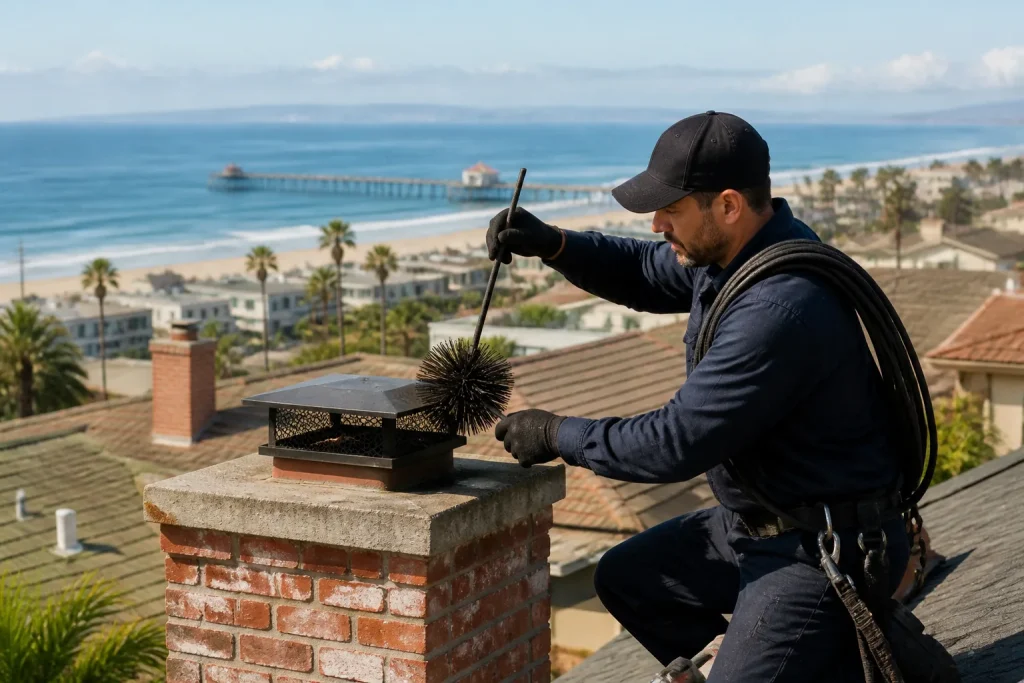
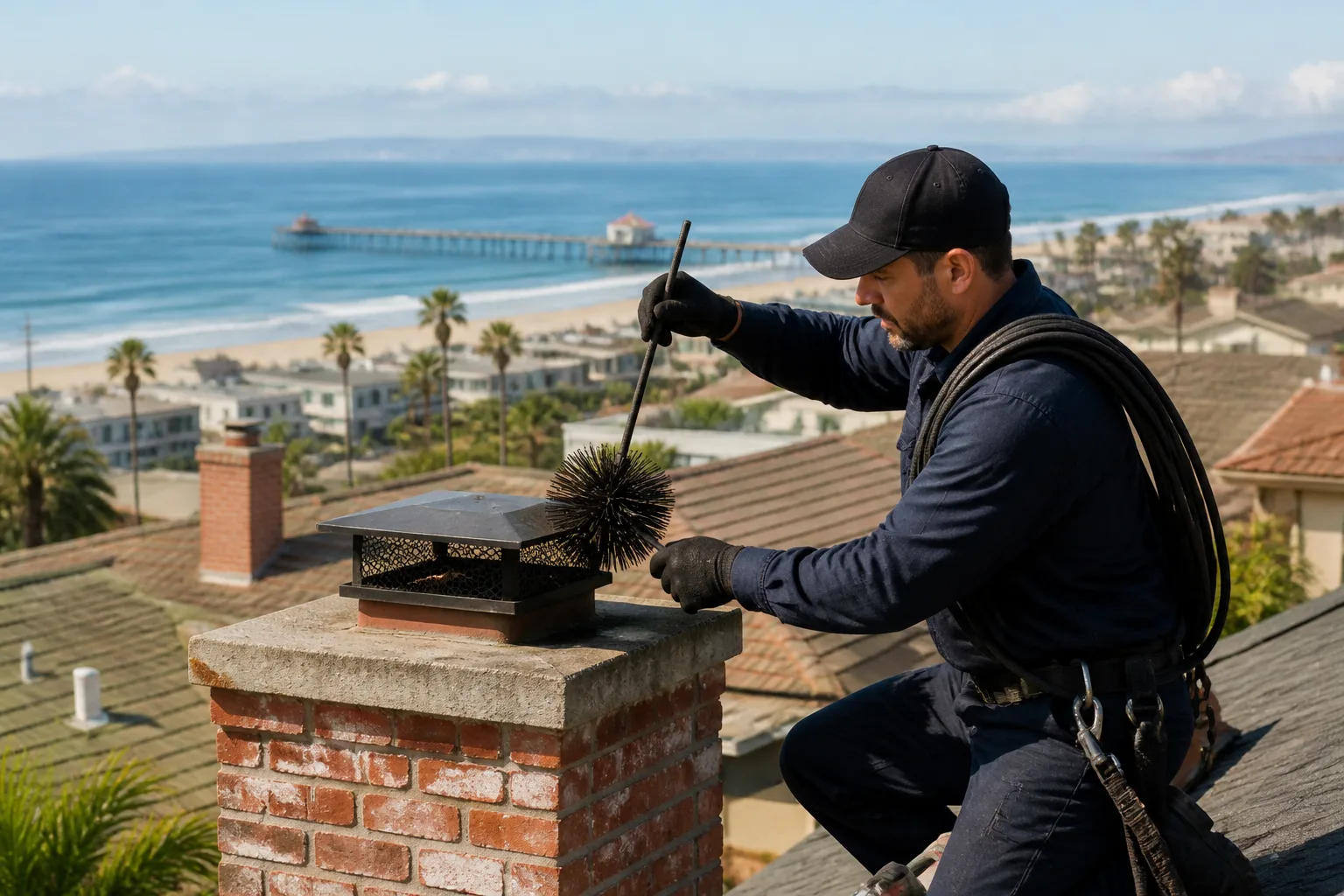
Emergency Chimney Sweep Near Me: What Huntington Beach Homeowners Should Do First
If you smell smoke in the room, see it rolling back out of the firebox, or hear a low roar in the flue, stop and answer one question: is there fire where fire shouldn’t be? If flames, sparks or heavy smoke are coming from the chimney itself, call 911 and get everyone outside. If you have smoke backup, a strong creosote smell or a flue that won’t draw, that’s an urgent sweep, not a fire call. Most Huntington Beach chimney emergencies are contained in the first 15 minutes by a homeowner who knows exactly which three actions to take before a technician arrives. This guide covers those actions, so a manageable situation doesn’t turn into structural damage or a dangerous second burn.
Is It a Fire Emergency or an Urgent Sweep?
Not every chimney crisis looks the same. The first job is sorting a true fire emergency from a smoke or odor event that needs fast attention but isn’t a 911 call. Getting this wrong goes both ways: people call the fire department for a little rollback, or they wait out a smoldering flue fire because the flames weren’t visible.
Call 911 first if you see or hear any of these:
- Flames or sparks visible at the top of the chimney or coming through cracks in the masonry.
- A roaring or rumbling sound from the flue that doesn’t settle when you close the damper.
- Smoke pouring into the room that doesn’t clear when you open a window.
- The smell of burning creosote (it’s sharper and tarry, not like wood smoke) with visible heat discoloration on the chimney.
- Anyone with headache, dizziness or nausea in the house. That can point to carbon monoxide, and you evacuate, call 911 and get fresh air.
Call for an urgent sweep if:
- Smoke rolls back into the room and the flue won’t draw.
- A heavy creosote smell lingers long after the fire is out.
- You hear cracking or popping from the firebox after extinguishing.
- The damper won’t close or open fully.
If you’re not sure which category you’re in, err toward the fire department. They can tell you within minutes, and a chimney fire that’s already spread into attic framing gives you very little time. When you’ve confirmed it’s a sweep problem, a trained technician is the right next call. Huntington Beach homes run older fireplaces alongside newer ones, and the age of the house changes what we look for.
The First 15 Minutes: What to Do Before Anyone Arrives
If it’s a flue fire or heavy smoke event, the steps below buy time and reduce damage. If it’s a full fire emergency, skip to evacuating and calling 911. Otherwise, work through these in order.
- Close the damper, but only if the fire is out and the flue is smoldering. A closed damper starves a flue fire of oxygen. If flames are actively burning in the firebox, leave the damper open, open a window and get out. Closing the damper on an active firebox fire pushes smoke into the room.
- Smother a smoldering flue fire with baking soda. A cup or two tossed onto the coals cuts oxygen and knocks the fire down. Never use water on a hot firebox or a creosote fire. It can crack firebrick and flash steam back at you.
- Open windows strategically, not all at once. One window near the fireplace on the same floor is usually enough to break the negative pressure that’s pulling smoke into the room. Opening every window can create a cross draft that feeds the fire. Crack one, watch the smoke, adjust from there.
- Get everyone out if the smoke doesn’t clear in a few minutes. Air quality in a smoke-filled room drops fast, and carbon monoxide is invisible.
- Don’t relight the fireplace. Not that night, not the next night. A flue that just had a fire in it needs inspection before you use it again. This is the part people skip, and it’s where the real damage starts.
We’ve seen the same pattern repeat across Huntington Beach: a homeowner handles a small flue fire well, then lights a fire the next night because it “seemed fine.” That second fire is where cracking and spalling show up. Give the system a day and an inspection before you use it again.
Why Calling a Handyman or HVAC Company Can Backfire
A chimney emergency isn’t a general handyman job, and it’s not an HVAC job either. When you call a generalist, they often clean the flue and leave without documenting what happened. That missing documentation matters if you file an insurance claim later.
Here’s what a legitimately trained chimney professional does on an emergency call:
- Level 2 inspection protocol. That means a visual inspection of accessible portions of the chimney, plus a video scan of the flue interior. A quick brush-and-leave doesn’t tell you whether a flue fire cracked the clay tile.
- Written findings with photos. An insurer or adjuster wants to see what was found, when, and by whom. A handyman’s invoice rarely covers it. A trained sweep’s report usually does.
- Assessment of the whole system, firebox to crown. A sweep who only looks at the flue misses a cracked crown or a missing cap, which is where water gets in and where the next problem starts.
Certification matters here, and we’d rather you know that up front than find out during a claim. Ask whether the technician has industry certification, and ask what materials they use on any repair. Professional-grade parts matter more than the invoice total. At Huntington Beach Chimney Sweep Pros, our technicians have up to 15 years of experience working with brands like DuraFlex, HeatShield and Olympia Chimney, the same systems specified by chimney professionals across the country. That’s not a sales point so much as a way to say the repair will hold up.
If you’re not in an emergency but want a routine chimney sweep, it’s cheaper and easier to book before burning season than after.
What a Real Emergency Chimney Company Does on Arrival
A good emergency response starts with a diagnostic, not a brush. When a technician arrives, here’s what a proper visit looks like.
First, they ask what happened: when the fire started, whether smoke rolled back, what the smell is like, whether anyone felt symptoms (headache, dizziness, nausea – those can point to carbon monoxide). Then they inspect from the firebox up. That means checking the damper operation, the firebox panel for cracks, the flue interior with a video scan, the smoke chamber, the crown and the cap.
Only after that inspection do they tell you three things:
- What happened and why.
- What needs to be done now versus what can wait.
- What it costs, in writing, before anyone starts.
You should never get a number before the inspection. The photo and video report they show you is the evidence base. If you can’t see it on screen, don’t pay for the repair. That’s the standard we hold ourselves to, and we’d encourage you to hold anyone you hire to it.
Depending on the findings, the fix might be as simple as a sweep and a new cap. It might call for liner restoration. That’s where HeatShield comes in, a resurfacing system that can restore a deteriorating liner without pulling it out. If the flue is too damaged for that, a DuraFlex flexible liner rebuilds the interior. Catching it before it costs more is almost always the cheaper path.
Red Flags That the Liner Needs a Closer Look
A flue fire doesn’t always show obvious exterior damage. The liner can crack while the chimney looks perfectly normal from the outside, and that’s why a camera inspection is non-negotiable after any suspected flue fire.
Watch for these after an emergency:
- Spalling. Flakes or chunks of clay tile or mortar found in the firebox or cleanout.
- Cracking or popping sounds. Damaged tile can audibly shift with heat.
- Smoke smell after the fire is out. A lingering smoke smell often means gaps in the liner where flue gases are escaping into the chase.
- Discoloration on the wall or ceiling near the chimney. Heat moving through gaps shows up as staining or discoloration.
- Loose masonry or shifted bricks around the firebox. The firebox sees the hottest temperatures and usually shows damage first.
Any one of these calls for a Level 2 inspection before the fireplace is lit again. This is where you use a fireplace repair technician who understands the full system, not just the surface. And it’s the reason we’d send you toward a camera inspection even if you call someone else.
When to Call a Pro
Call a pro the moment you’re dealing with a smoke-backup, a smell you can’t explain, or a flue that stopped drawing when it used to draw fine. Call 911 if it’s a fire. Every other case in Huntington Beach is a call we can help with.
Preventive work also matters. A chimney cap & crown is the cheapest way to stop the water damage that starts most chimney problems in the first place. If you’ve been meaning to book a routine sweep before the next burning season, this is that moment.
Related services in Huntington Beach: chimney sweep, inspection, fireplace repair, and cap and crown work. If you’re looking for a chimney sweep you can trust with the whole system, start with Huntington Beach Chimney Sweep Pros.
The Bottom Line
Most chimney emergencies are handled by three things: knowing whether it’s a 911 call or a sweep call, closing the damper and cutting the fire’s air supply, and getting a trained eye on the flue before you light the next fire. That third step is the one most homeowners skip, and it’s where cracking and liner damage hide. A proper Level 2 inspection with a photo and video report is what tells you what needs fixing now versus what can safely wait.
If you’re in Huntington Beach and need help, Huntington Beach Chimney Sweep Pros offers free estimates. Call (877) 770-0951 to book a sweep or an inspection. We answer 24/7. Fast dispatch from 7am to 7pm, Sunday through Friday. Written estimates are set per job, and nothing is recommended without camera evidence you can see for yourself.
Frequently Asked Questions
Open one window near the fireplace to break the negative pressure, check whether the damper is closed, and look for smoke rolling out of the firebox. If the fire is out and the smell is sharp and tarry, that’s a sign of creosote or a flue fire and calls for an urgent sweep. If you see or smell smoke and anyone in the house has a headache or dizziness, get out and call 911. Call (877) 770-0951 for an exact quote once you’ve confirmed it’s a sweep problem – estimates are free.
A general handyman can brush a flue, but they usually won’t give you the inspection documentation that insurance claims require, and they can’t assess liner damage. A trained chimney professional performs a Level 2 inspection with a video scan and gives you a written report. If you’ve just had a flue fire, that report matters. Ask for it before you hire. Call (877) 770-0951 if you’d like a written inspection for your Huntington Beach home – estimates are free.
The clearest signs are spalling (chunks of tile or mortar in the firebox or cleanout), popping or cracking sounds with heat, a lingering smoke smell after the fire is out, and discoloration on the wall near the chimney. Any of these calls for a camera inspection before you light the fireplace again. A plain visual check from the roof is not enough. Call (877) 770-0951 to book an inspection – estimates are free.
If it’s a smoke-backup, a strong creosote smell, or a flue that won’t draw, it can wait until a technician can get to you, but don’t light the fireplace in the meantime. If you saw flames at the cap, heard a roar in the flue, or had smoke fill the room, treat it as an emergency and call 911 first. Once the fire department clears the house, book the inspection. Call (877) 770-0951 for exact pricing – estimates are free, and we’ll tell you plainly what can wait.
Written by the team at Huntington Beach Chimney Sweep Pros.
Need Chimney Cleaning Help?
Call Huntington Beach Chimney Sweep Pros - the local pro we connect you with is licensed and insured, here with fast help in Huntington Beach.
(877) 770-0951